
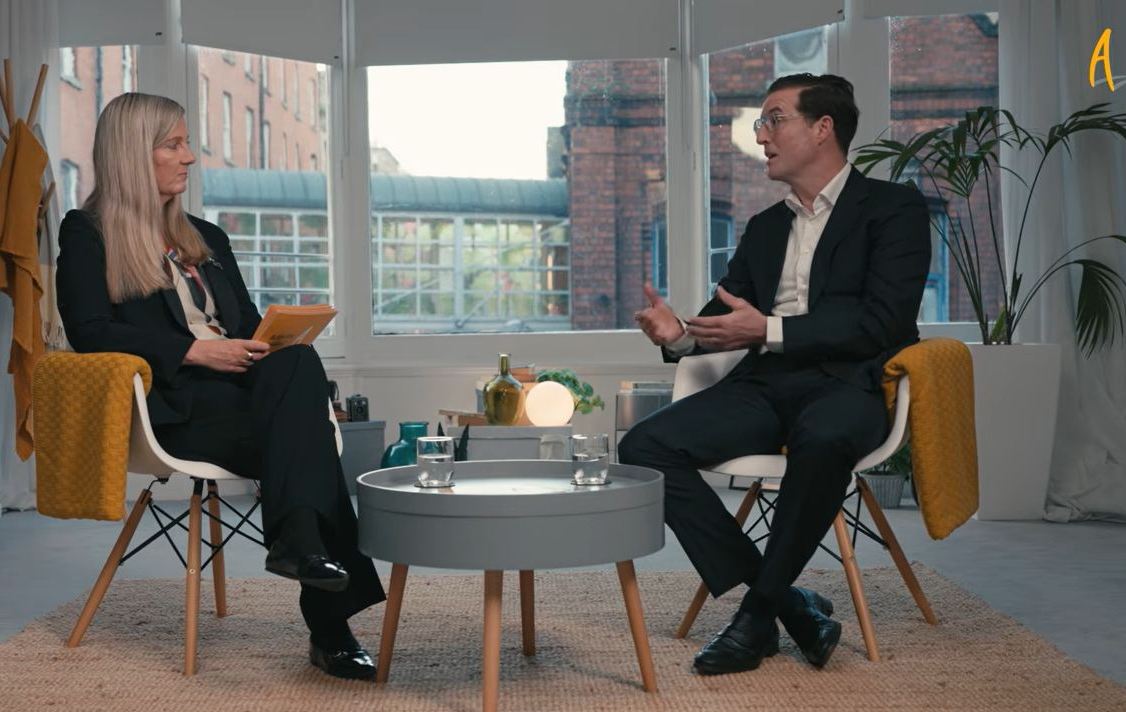
Watch this video of Professor Brian Devitt discussing being fit for surgery with Grainne O’Leary of Arthritis Ireland.
For many people living with arthritis, surgery can significantly reduce pain and improve mobility and quality of life. This in-depth conversation offers essential insights, practical tips, and supportive advice on how to best prepare for surgery.
This video was recorded as part of Arthritis Ireland’s Conversations Series.
 Professor Brian Devitt is a Consultant Orthopaedic Surgeon specialising in the hip and knee at UPMC Sports Surgery Clinic in Santry, Dublin.
Well, I suppose patients need to be in the right frame of mind for surgery, that’s really important. They also need to require surgery; I think that having the information provided by the specialist and going through the process so that they feel like they are in the right stage of life for surgery. The right frame of mind is then really important, and I think those two go hand in hand with each other. You need to be physically prepared, emotionally prepared, psychologically prepared and also administratively prepared as well, you have to get things in order in your house you have to get shopping in, you know all these things that people forget are important. So, there is plenty of time for this once you’ve had the consultation and you are told that surgery is an option, I think then you go about getting all the other bits and pieces in place.
I think fitness is really important, just a general level of fitness. Having arthritis particularly in the knee or hip it does make you a lot stiffer so doing exercise can be quite challenging, but it doesn’t mean you can’t do some form of exercise, some low impact exercises like swimming or Pilates. Fitness is also good for our mental health; I think that having a good level of fitness really improves our ability to rehabilitate as well. So, we talk about prehabilitation, people go through a similar set of exercises before surgery that they would expect you to do afterwards, and it just makes that transition into the post operative phase much easier.
Yeah, I think you have to be cognisant in the fact that patients who have arthritis are going to be in somewhat pain, and they are going to be a little bit stiff, so the exercises are not really that easy. I always recommend low impact exercises, we have recently introduced the concept of using pedals, it’s not just an upright stationary bike but like small little pedals you put under your seat and we get patients to use this post-operatively but we do encourage them to purchase the pedals pre-operatively, they’re not expensive maybe €30 and they are really helpful in terms of getting that knee moving. The other types of exercises would be the likes of aquarobics or hydrotherapy is really important because its low impact it’s also a really nice social interaction with people of similar age and it tends to be more elderly population who have arthritis and therefore it’s really important to maintain that social link and exercise shouldn’t be seen as a chore it should be seen as a pursuit to meet people, something that improves your mental health really.
Yeah, it is really important, I think nutrition is key you have to eat well and need plenty of protein, we are even looking into supplying creatine after because particularly after there is a lot of muscle breakdown and atrophy after surgery and the likes of creatine has been shown to be very helpful in that period. We have recognised in our practice how important it is, we actually got a nutritionist come in and work with us because at the end of the day I am a biological carpenter as they say in orthopaedics, I am not a specialist in nutrition. We really try to impart how important it is but it’s best to put people in front of people who are experts in that area and that the philosophy we have, is to be quite holistic around it. Eating well before hand is important, maintaining a good body weight is key as well and there are certain patients who would come to us overweight and we realise we are probably not the right people for them at that time. Losing weight can be very important but you find the people who are overweight are often malnourished so it’s really important that you do not assume a level of nutrition, you have to assess it. Some of the blood tests that we do are really important just to make sure that someone is well nourished particularly in terms of protein and things in their blood. So, nutrition is really important.
Yeah, I think within reason, I think that we often hear people say “oh I can’t lose weight because I can’t exercise” but we recognised that losing weight isn’t all about exercise, it’s more about diet. Exercise is important because if you’re not able to have those endorphins with exercise then you are probably more likely to reach for the bag of Doritos and lie on the couch in the evening. Having the ability to do low impact exercise gets the endorphin levels right and it’s just that kind of routine and regime that people have introduced which is healthy living, that is really important with nutrition.
Yeah, particularly when they are struggling with it and their diet isn’t great and they just want an expert opinion. One of our colleagues is a bariatric surgeon gave us a good talk recently, he said “telling someone who is obese to lose weight is like telling someone who is depressed to cheer up”, so there’s not really a good enough day to say it to someone you have to give them the opportunity to engage with a specialist try to change their eating habits.
One of the things we do as part of our clinic and in the hospital is we bring patients to we what we call a pre-assessment clinic. In the pre-assessment clinic there is physicians, there is specialists in different areas, anaesthetists, cardiologists who run that. Essentially what we do is make sure we optimise all of their other health conditions, in reality you are not going to cure diabetes or a cardiovascular disease but we do want to make sure that they are well managed, so that come the time of surgery there is no issues or as few issues as we can possibly avoid or mitigate. It also means that we are less likely to have cancellations for reasons that patients can stop medications that they need to stop before surgery, and they give them plenty of advice which is key.
Well, I think smoking we definitely regard is a very negative outcome on surgery, poor wound healing, greater risk of infection so certainly to eradicate smoking would be very important. I think we all say as doctors everything in moderation, you know to cut out alcohol entirely may not suit every individual it might be used to a drink or something of a weekend and I don’t think it’s really shown that to eradicate that entirely is going to make that much more of a difference. Really just having everything in moderation and a healthy diet, exercise as part of your lifestyle and not having excesses of alcohol or any type of drugs or anything like that certainly wouldn’t work, but thankfully most of our population have made good lifestyle choices.
I think its anxiety it a very important one and also just not being prepared. People come in and they probably have expectations about what the surgery entails, and I think it’s really on the surgeon to give them an idea of what the whole process going to look like. So if people aren’t aware of thinks it tends to breathe anxiety, so we sit down and we explain, you know, how long they are going to be in hospital, we explain the pre assessment clinic, we explain that they are going to be in pain and I say to the patient, we have a few little phrases, “pain is inevitable, suffering is optional” so we have little thinks that we do to reduce pain like using ice afterwards, using the pedals that I mentioned, appropriate medication.
One of my favourite phrases is “He or She who has low expectations is never disappointed” so I think sometimes the first consultation or the consultation when you book surgery our expectation is about realigning our expectations sometimes as surgeons we have low expectations and the patient has high expectations and we try to bring them to an equilibrium, I think that’s really important and that comes with communication and the negative emotions like anxiety can be crippling for some people and just telling them hurting is not harming, when you feel pain afterwards you need to continue moving because that’s really important. So don’t associate pain with stopping that’s really important but pain to an appropriate level obviously and that’s really important in terms of communication.
Yeah, I think it’s really important pain is probably the factor that causes most anxiety for people afterwards, so I think speaking to patients about it a lot of times it allays their fears. The few things we do differently now days is we get patients moving straight away after surgery so within 4 hours of surgery the patient is up and walking. To allow us to do that we have different types of anaesthesia that we use so we give them sedation, so they are nice and relaxed during surgery, then during surgery we give lots of local anaesthetic so that it prolongs the pain relief afterwards, so this allows the patient to move and once they get up and move the same day it makes a big difference.
The other factors we have looked at the likes of using pedals, so we mentioned previously, one of my colleagues in the Gold Coast has done a randomised control trial where he has shown that using pedals when patients have pain actually reduces the requirements for narcotics and the narcotics are a medication that are very effective but also they have some side effects, so the quicker we can get people off them the better which is fantastic from our perspective. Then we look at the likes of cryo compression, so like ice and compression to reduce pain afterwards which is really effective and also reduces the need for narcotics. So, these factors are really important, movement I think is really key to recuing pain after surgery so we try to encourage that as much as we can but also respecting swelling and giving anti-inflammatory’s bringing that down is really important.
Well, I think sport is really important for patients, but you also have to be aware that certain patients will differ in term of what kind of support they require, some are independent while others are more reliant on their relatives for care. So, I think these things are really key, we like to provide some information regarding the requirements they would have afterwards and are nurses are fantastic to provide that I think just giving them an awareness of what to expect is really important as support mechanism, yeah so, I think that they are the real key factors.
I think the logistics is very important, just to give patients an idea how long they are in hospital first is really important. Normally for a knee or hip replacement you’re in hospital for 2/3 nights afterwards so if patients are travelling a distance they will come in the night before but normally 2/3 nights post operatively. We’ve seen quite a bit of a change in terms of how quickly we rehabilitate people nowadays compared to maybe 10/15 years ago, the patients are up walking the same day as their surgery which is great. We also have tried to get them independent with crutch usage within a day or so and get them doing the likes of stairs before they leave. So, these are all the criteria that the physiotherapist uses to make sure they are fit and safe to go home. In terms of the logistics going home you know we encourage people to use stairs but it has to be realistic you don’t want to be going up and down the stairs all the time so I often tell people if you’re going upstairs make sure you get all the things you need from upstairs before you go down because if you forget something it can be a pain. Whether patients require rehabilitation or not is very much individual based.
If you are living alone it might help to have some respite so someone can cook your meals and be available but a lot of time people want to get home to their own bed and it makes it more convenient to get a better night sleep they can also trade their own nutrition based on what they like, sometimes you go to hospitals and you don’t particularly like the food. Ther has been no evidence to suggest that going into rehabilitation afterwards is better than doing self-directed rehabilitation, I think that is important for patients to understand, they will give you the tools, we will give you the exercises it’s just a case of you doing them and the first two weeks are challenging but they are not horrendous. We want to make sure the pain is under control before the patients go home, that is really important.
I think having too fixed a mindset isn’t always that helpful, you need to be somewhat opened minded, I think you will want to expect that you are going to have some kind of discomfort that is just at a base line, you know that it isn’t going to be a walk in the park, excuse the pun. So we want people to be aware that pain is going to be part of this journey but it’s not an instrumental obstacle, we want them to have a good sense of resilience, they are going to have to be ready to get up when they don’t want to get up and do their exercise I think that’s really important other than that it’s just about not catastrophising little things that might possibly go wrong or the most problems that we face are solvable you just kind of have to have an open mindset to be willing to take help but also to help yourself as well.
I suppose the most important question is ‘Are the at the point where they need a joint replacement?’ because I think getting to that point is really key. So, for me you see a couple of different people, people come in and they are expecting me to say they need a arthroscopy or something, a wash out of their knee, I am then breaking the news that they need a knee replacement or they are going to have a knee replacement in the future. I would very rarely book that patient for a surgery at that time because they need to go away and think of that information.
In terms of their readiness, patients tend to know when they are ready, they have got pain at night, they are incapacitated by their arthritis, they know when they are ready for surgery and I think that’s really important. Then you need to know what the logistics are and often times you know it’s not necessarily me who provides that information we have a really good administrative team that are able to give them dates, they can look through their social calander, so someone telling me they have a wedding and this that and the other at the consultation I am happy to listen but I am not the person making that appointment.
Then the key factors you need to know about are the complication potential risks, now we don’t dwell on them too much because any risks that we explain we have means of mitigating those risks but just being aware that we are explaining it to them so that if something were to happen that there was some awareness of it, whereas people get very disappointed if they felt like they haven’t been given that time for people to explain things.
Yeah so I think that is where a lot of people will be in so much discomfort with their arthritis that they will say ‘yeah whatever risks they are I am happy to take them’, you know if they risks were very high then we wouldn’t be doing the surgery because it’s not worth it but the risks are very low. It is just being sensible but it also giving the patient the awareness that if they see any signs of infection or something, that they present really quickly that we can eradicate it much more rapidly and efficiently if we get people presenting early doors but we also don’t want to instil a level of fear where they are looking at their knee every second and they are afraid to do things because they might get an infection or something like that. So, I think it is just a balance and that just comes with our level of comfort with being open and discussing these things and just giving them some figures and say it’s very low, so that’s the key.
Yeah, I think the first few weeks are the hardest, there is no doubt about it, you know as I mentioned earlier just having the date set in your mind, a lot of people say, you know ‘I want my knee done yesterday’ but once they are given a date they can really focus because we can put up with anything as long as we know when it’s going to stop, so I think that’s key to people, having the date.
Then I think it is, as I mentioned, saying that you are going to have a level of discomfort for a period of time, it doesn’t stop you moving but you will be rid of that dull, aching, gnawing pain that wakes you up at night, you may have some surgical pain but that will pass. I think giving them the reassurance for that, but you know just really the first couple of days are going to be really uncomfortable, you might have a bad night sleep, fall asleep in the middle of the day, and that’s find that is part of the rehabilitation program, you will have your fluctuation in moods, but you really need to not let this catastrophise and know that this too will pass and you will get over it like the vast majority of people do, you really have to try part a level of positivity
If I could spot them straight away it would make my life easier, but then how would you manage it because you’re going to deal with patients based on their condition and not their personality type. Those people who tend to do well they just get on with it, just no-nonsense people who tend to not really suffer too much anxiety, they don’t worry, they listen, they trust you, they do what they are told. People who tend to do badly, are the people who are really hyper-anxious I find, and they all get there in the end as well, but they struggle a bit more not that they do badly so speaking but they do struggle more.
So perhaps with them they might benefit from speaking to another patient who has gone through it so they can really get into the weeds and the little things that really stress them out but it is hard to know but we do tend to be able to spot people, you know those people who you need to I suppose be a bit more encouraging, put your arm around their shoulder, spend some time afterwards, sitting down with them, looking at them at eye level and not just like a quick post operative round, you might need to talk to them a bit more. You recognise those people and then other people, you are doing the ward round, and they are already on the corridor doing the laps. Everyone has points where you are going to be a little bit vulnerable, we just want them to build up a level of resilience to get through it.
|